Freelance TDL Team and Tally Development Company in Delhi, India – Custom TallyPrime Development Services
Businesses using TallyPrime often require specialised functionality to manage their accounting, inventory, billing and reporting processes. While standard TallyPrime features support many business activities, companies may need additional customisation to match their internal workflows.
A business may require a customised invoice, a special sales report, additional voucher fields, inventory analysis or automated calculations. Tally consultants and software partners may also receive customer projects that require specialised development expertise.
In such situations, working with a freelance TDL development team or an experienced Tally software development company can be a practical option.
Delhi NCR is home to businesses across trading, manufacturing, distribution, retail, construction and professional services. These organisations often require different types of TallyPrime customisation and technical assistance.
This article explains how a TDL development team can support businesses, what services may be available and how to select the right technical development partner.
1. What Is a Tally TDL Development Team?
A Tally TDL development team consists of technical professionals who work on customisation and development requirements for Tally applications using Tally Definition Language (TDL).
Unlike a basic software installation service, a development team focuses on adapting supported TallyPrime functionality to specific business requirements.
Depending on the technical scope, a development team may work on:
Custom invoice formats.
Sales and purchase reports.
Inventory statements.
Additional voucher fields.
Custom printing formats.
Management information reports.
Custom menus and buttons.
Workflow enhancements.
Specialised calculations.
Existing TDL troubleshooting.
Integration-related development.
Business-specific reporting solutions.
A team-based approach can be useful when projects involve multiple requirements, testing and ongoing coordination.
2. Why Businesses Need a Dedicated Tally Development Team
Every business follows its own accounting and operational processes. Standard software features may not always display information in the exact format required by management.
For example, a distributor may need a consolidated report showing sales, stock and customer outstanding information. A manufacturer may require additional production-related reporting. A construction company may want project-wise expense summaries.
A development team can assess these requirements and recommend suitable customisation.
Multiple Development Requirements
Businesses may need several reports, invoice formats and workflow enhancements within one project.
Technical Expertise
Specialised projects may require knowledge of TDL, accounting workflows and the relevant TallyPrime environment.
Structured Project Handling
A team can divide work into requirement analysis, development, testing and implementation.
Support for Tally Consultants
Consultants may seek external development assistance when their customers need specialised technical features.
Project-Based Engagement
Businesses can discuss defined projects without necessarily hiring a permanent in-house development department.
The suitability of a development team depends on its actual technical capabilities, availability and agreed scope.
3. Tally TDL Development Services in Delhi NCR
Businesses in New Delhi, Gurgaon, Noida, Greater Noida, Faridabad and Ghaziabad may require TallyPrime customisation for different industries.
A development team may assess requirements in the following areas.
A. Custom Sales Reports
Possible sales reporting requirements include:
Customer-wise sales analysis.
Item-wise sales summaries.
Salesperson-wise performance reports.
Monthly sales comparisons.
Product category reports.
Invoice-wise sales statements.
Sales return analysis.
Branch-wise sales reporting.
B. Custom Purchase Reports
Purchase-related development may include:
Supplier-wise purchase statements.
Item-wise purchase analysis.
Purchase register enhancements.
Monthly purchase comparisons.
Purchase return summaries.
Supplier outstanding reports.
C. Custom Invoice Development
Businesses may need invoice layouts that contain additional information or follow their branding guidelines.
Possible customisation requirements include:
Company logo and branding.
Custom invoice headers.
Additional customer information.
Purchase order references.
Product specifications.
Payment instructions.
Delivery details.
Custom footer messages.
Special printing layouts.
D. Inventory Customisation
Inventory-related requirements may include:
Stock movement statements.
Item-wise stock reports.
Warehouse-related summaries.
Product transaction reports.
Stock ageing information.
Batch-related reports, where supported.
Product-wise sales and stock analysis.
E. Financial and Management Reports
Management may request:
Customer outstanding summaries.
Supplier outstanding reports.
Expense analysis.
Ledger transaction statements.
Cash and bank summaries.
Period-wise comparisons.
Department-wise reports.
Branch-wise management statements.
The final report design should be based on actual business data and clearly defined reporting requirements.
4. Tally Development for Different Industries
A development team should understand the business process before recommending customisation.
Trading Companies
Trading businesses may need customer-wise sales, supplier purchase reports, product movement statements and outstanding summaries.
Manufacturing Companies
Manufacturers may require material-related reporting, production information, inventory analysis and job-work-related summaries.
Construction Companies
Construction businesses may request project-wise expense reports, contractor summaries, site-related reporting and material purchase analysis.
Retail Businesses
Retailers may require customised billing formats, item-wise sales reports, stock summaries and product information fields.
Distributors and Wholesalers
Distributors may need customer-wise sales statements, inventory reports, order-related information and supplier analysis.
Professional Service Companies
Service organisations may require customer billing summaries, service income reports, outstanding invoices and expense classification.
The development team should assess whether the required information is already available in TallyPrime or whether additional customisation is necessary.
5. Freelance TDL Development Team for Tally Partners
Tally consultants and software service providers sometimes receive customer requirements that involve specialised development.
An external TDL development team can potentially support these assignments on a project basis.
Possible collaboration areas include:
Custom TDL programming.
Invoice format development.
Custom sales and purchase reports.
Existing TDL troubleshooting.
Inventory reporting.
Voucher-related enhancements.
Customer-specific workflows.
Technical testing.
Custom feature development.
Documentation and handover.
How Partner Collaboration Can Work
A typical arrangement may involve:
The consultant collects the customer's requirements.
The development team reviews the technical details.
Both parties agree on the scope and charges.
The development team prepares the customisation.
The consultant or customer tests the solution.
The approved development is delivered.
Any agreed support is provided.
Before starting, both parties should agree on customer communication, confidentiality, code ownership, payment terms and post-delivery responsibilities.
6. TallyPrime Development for International Businesses
A development team based in India may also receive enquiries from businesses and Tally professionals operating overseas.
International requirements can include:
Custom invoice formats.
Multi-currency reporting requirements.
Customer and supplier statements.
Specialised sales reports.
Inventory customisation.
Custom voucher fields.
Management reports.
TDL troubleshooting.
Integration assessments.
Remote technical consultation.
Remote project collaboration may be possible through online meetings, technical documentation and sample data.
International assignments require particular attention to time zones, data security, software compatibility and country-specific accounting requirements.
Any statutory compliance matters should be reviewed by qualified professionals in the relevant country.
7. TallyPrime Integration with ERP, CRM and Other Applications
Businesses increasingly use multiple applications to manage different departments.
They may want TallyPrime to exchange selected information with external software.
Potential integration projects include:
ERP integration: Exchange selected accounting and transaction data with enterprise software.
CRM integration: Connect customer-related information and sales workflows.
E-commerce integration: Assess options for transferring order and transaction data.
Inventory integration: Exchange product and stock information.
Custom software integration: Connect TallyPrime with internally developed business applications.
Reporting integration: Make selected information available to external analytics systems.
Integration depends on the external application's available interfaces, APIs, data structure, security requirements and technical feasibility.
A development team should examine both systems before recommending a technical approach.
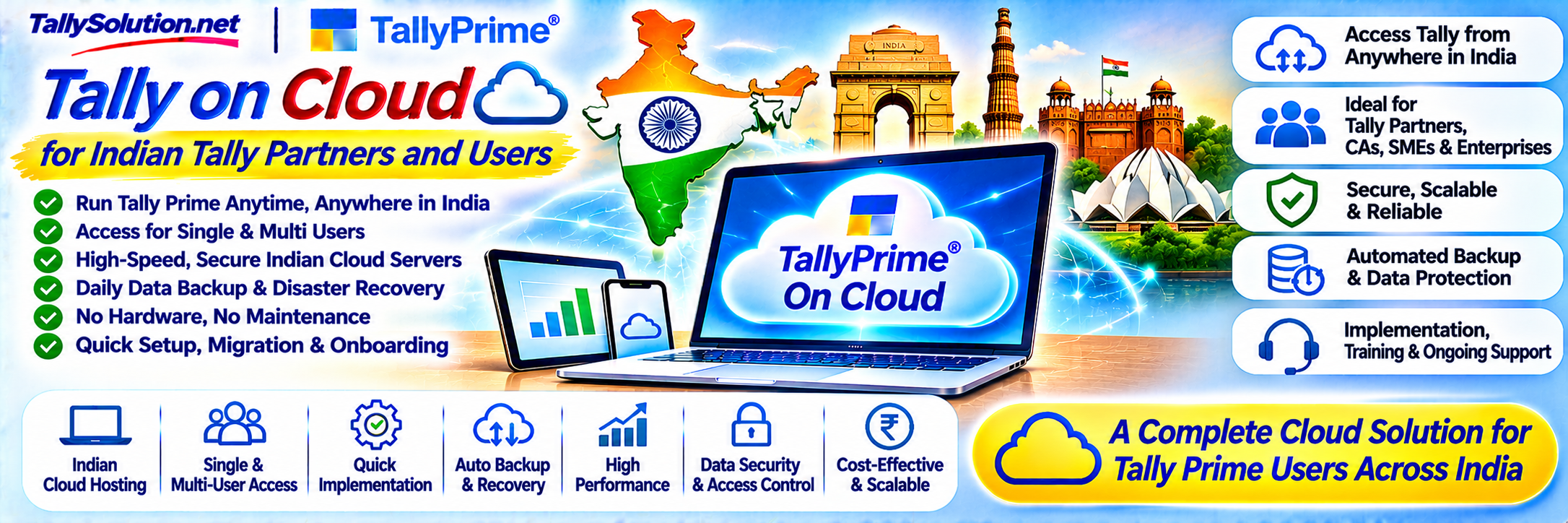
8. Tally on Cloud and Remote Access Requirements
Some businesses want their accounting team to access software from different offices or locations.
Depending on infrastructure and licensing arrangements, TallyPrime on Cloud-related solutions may support remote working requirements.
Businesses may enquire about:
Remote desktop access.
Centralised hosting.
User access management.
Access from multiple locations.
Server infrastructure.
Data backup arrangements.
Remote working configurations.
Access from compatible devices.
Cloud hosting and TallyPrime software licensing are separate considerations. The business should confirm licensing terms, infrastructure requirements, security arrangements and the number of supported users.
9. How to Select a Tally Development Company in Delhi
Before choosing a development company or freelance team, evaluate its technical capabilities and working process.
Technical Knowledge
Check experience with TDL and the relevant TallyPrime environment.
Accounting Understanding
The team should understand the business purpose behind the requested feature.
Development Experience
Ask about similar projects involving reports, invoices, inventory or workflow customisation.
Requirement Documentation
The provider should prepare a clear scope before starting development.
Testing Procedure
Confirm that the solution will be tested using suitable sample transactions.
Compatibility
Check that the proposed customisation is suitable for the intended TallyPrime version.
Data Security
Discuss how company data and remote access will be protected.
Transparent Commercial Terms
Obtain a written quotation with deliverables, exclusions and payment milestones.
Post-Delivery Assistance
Clarify whether future modifications, debugging and updates are included.
10. Typical Tally TDL Development Process
A structured project process helps ensure that the final solution matches the agreed requirement.
Step 1 – Initial Consultation: Understand the business problem and desired result.
Step 2 – Requirement Collection: Gather sample invoices, reports, screenshots and workflow details.
Step 3 – Technical Assessment: Review TallyPrime version, available functionality and development feasibility.
Step 4 – Scope Preparation: Document features, deliverables and exclusions.
Step 5 – Quotation: Confirm development charges and estimated delivery time.
Step 6 – Development: Complete the agreed programming and customisation work.
Step 7 – Testing: Test the solution using representative transactions and sample data.
Step 8 – Approval: Obtain customer feedback and confirm that the agreed requirements have been met.
Step 9 – Delivery: Provide the approved solution and relevant usage instructions.
Step 10 – Support: Handle any assistance covered under the agreed support terms.
11. Tally Development Services Through TallySolution.net
TallySolution.net provides a platform for businesses, consultants and Tally professionals to enquire about TallyPrime customisation and technical development requirements.
Depending on project scope and technical feasibility, enquiries may include:
Tally TDL development.
Custom invoice formats.
Sales and purchase reports.
Inventory-related customisation.
Management information reports.
Voucher-related enhancements.
Custom workflow development.
Existing TDL troubleshooting.
Integration assessments.
Remote development projects.
Technical collaboration for Tally consultants.
Businesses can share their requirements, software version and sample output for an initial assessment.
Development scope, commercial terms, delivery timelines, compatibility and post-delivery support should be agreed upon before work begins.
12. Frequently Asked Questions
Q1. What is the difference between a freelance TDL developer and a development team?
A freelance developer generally works independently, while a team may divide technical work, testing and project coordination among multiple professionals. Actual capabilities depend on the people involved.
Q2. Can I hire a Tally development team in Delhi NCR?
Businesses in Delhi, Gurgaon, Noida, Greater Noida, Faridabad and Ghaziabad can enquire about available TallyPrime development services and remote project arrangements.
Q3. Can a TDL development team create custom invoices?
Supported invoice formats and printing layouts may be customised according to the business requirement.
Q4. Can a development company create customised reports?
TDL development may be used to create additional reports and modify supported report presentations.
Q5. Can Tally consultants outsource technical projects?
Consultants and software service providers may explore project-based collaboration with external development teams. Commercial and technical responsibilities should be documented.
Q6. Can a development team work with international clients?
Remote development arrangements may be possible for overseas businesses and Tally professionals, subject to service availability and project terms.
Q7. Can TallyPrime be connected with ERP or CRM software?
Integration may be possible depending on the applications, supported interfaces, APIs, data formats and security requirements.
Q8. How much does Tally TDL development cost?
The price depends on complexity, number of features, testing requirements and delivery timelines. A quotation should be prepared after reviewing the scope.
Q9. Can existing TDL customisations be enhanced?
Existing TDL files may be reviewed for troubleshooting or further development, subject to compatibility and access to the relevant technical files.
Q10. How can I enquire about Tally development services?
Visit TallySolution.net and share your TallyPrime version, business requirements and expected output to request an initial discussion.
Conclusion
A freelance TDL team or Tally development company can help businesses address specialised accounting, inventory, reporting and operational requirements. From customised invoices and management reports to workflow enhancements and integration assessments, the right technical approach can make TallyPrime more suitable for individual business processes.
Before selecting a development provider, evaluate its technical capabilities, requirement analysis process, testing methods and commercial terms.
TallySolution.net welcomes enquiries from businesses, Tally consultants, software professionals and international clients looking for TallyPrime customisation and development assistance.
Visit TallySolution.net to discuss your Tally TDL development requirements.