Tally TDL Development and Developers in India – Custom TallyPrime Reports, Invoices and Business Automation
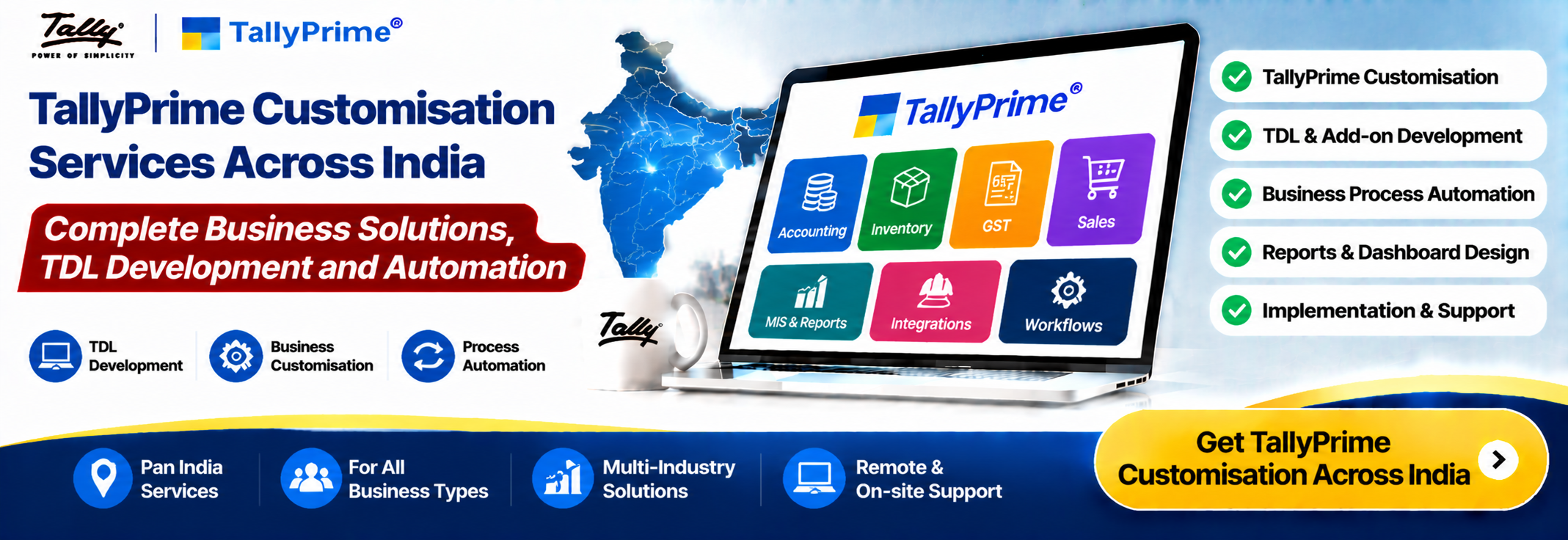
TallyPrime is used by businesses across India for accounting, inventory management, sales, purchases, taxation and financial reporting. While its standard features cover many everyday business requirements, some organisations need additional functionality to match their internal processes.
A trading company may want a customised sales analysis report. A manufacturing business may require specialised inventory information. A distributor may need additional fields in its invoices, while a service company may want customised management reports.
This is where Tally TDL development becomes useful.
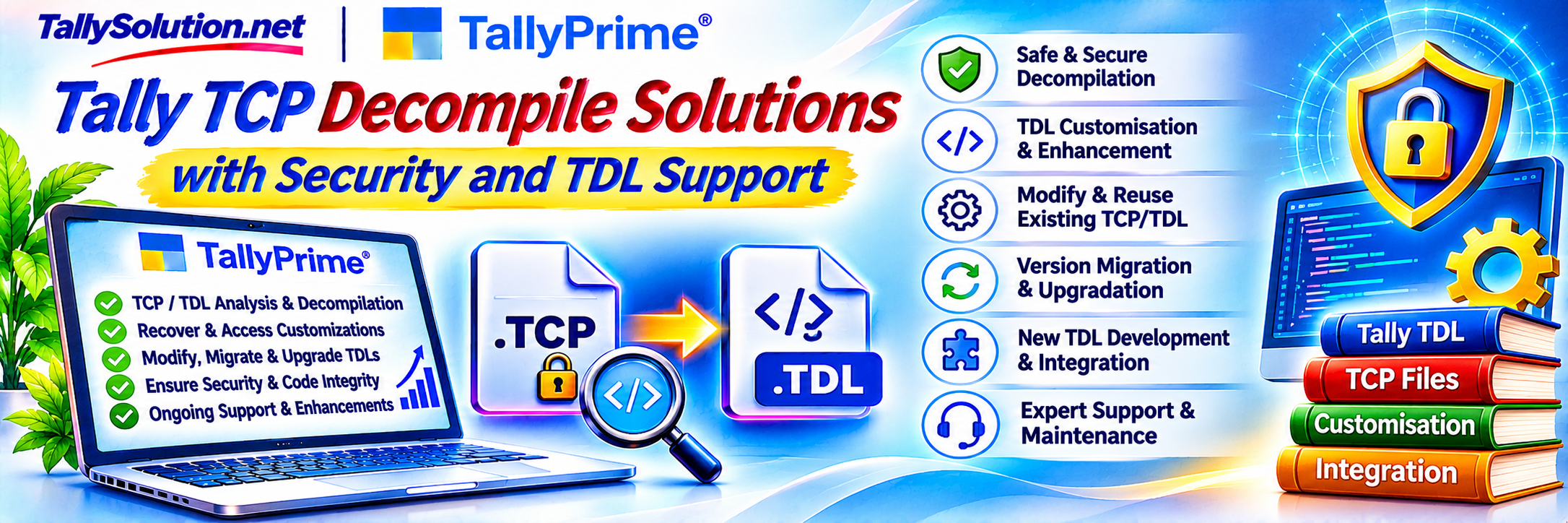
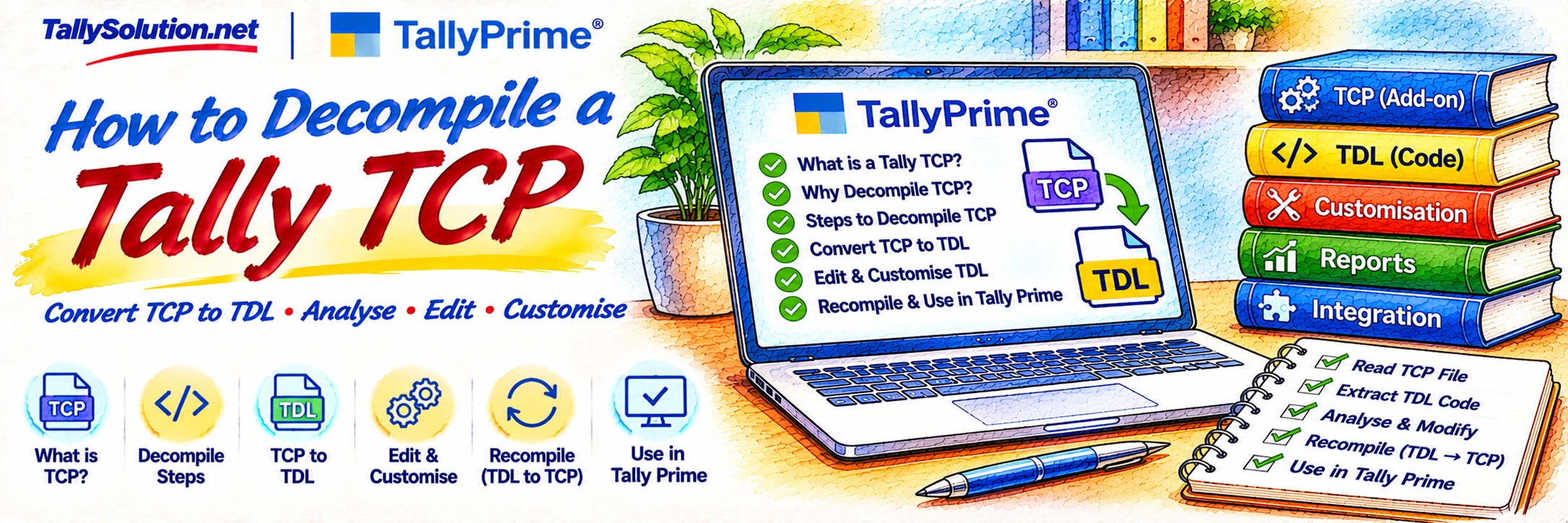
Tally Definition Language (TDL) is the development language used to customise and extend Tally applications. With suitable technical expertise, developers can create additional reports, modify supported screens, customise invoice formats and improve business workflows.
Businesses searching for Tally TDL developers in India should look for professionals who understand both Tally's technical environment and practical accounting requirements.
1. What Is Tally TDL Development?
TDL stands for Tally Definition Language. It is used to define and customise various aspects of Tally applications.
TDL development can help businesses adapt TallyPrime to specific operational requirements rather than changing their entire accounting process to match standard software layouts.
Depending on the available functionality and technical feasibility, TDL can be used for:
Custom reports and statements.
Additional fields in supported screens.
Custom invoice formats.
Voucher-related enhancements.
Specialised printing formats.
Custom menus and buttons.
Business-specific calculations.
Data entry improvements.
Inventory-related reporting.
Management information reports.
Workflow enhancements.
TDL development should be based on a clearly defined business requirement. Not every requested feature can necessarily be implemented, and compatibility should be checked against the relevant TallyPrime version.
2. Why Do Businesses Need Tally TDL Developers?
Every business has its own accounting and operational procedures. Standard reports may provide useful information, but management sometimes needs a different presentation or additional details.
A TDL developer can assess whether the required functionality can be implemented through customisation.
Common reasons businesses hire TDL developers include:
Customised reporting: Businesses want reports that display specific information in a particular format.
Invoice customisation: Companies need additional fields, branding, layouts or printing options.
Reduced manual work: Some repetitive calculations or data-entry steps may be improved through suitable customisation.
Better visibility: Management may require more detailed sales, purchase, inventory or outstanding reports.
Business-specific workflows: Organisations may need additional information captured during supported transaction entry processes.
Integration requirements: Businesses may need technical assistance to exchange information between TallyPrime and other applications.
A well-planned customisation can improve the usability of existing workflows without introducing unnecessary complexity.
3. Types of Tally TDL Development Services in India
TDL development covers several types of customisation projects.
A. Custom Sales Reports
Businesses may require sales information in formats that are not available in their preferred standard report layout.
Possible development requirements include:
Customer-wise sales summaries.
Item-wise sales reports.
Salesperson-wise performance reports.
Monthly sales comparisons.
Invoice-wise sales statements.
Product category reports.
Sales return summaries.
Branch-wise sales reporting.
Customer-specific transaction summaries.
B. Custom Purchase Reports
Purchase departments may need reports for reviewing supplier transactions and purchase patterns.
Possible requirements include:
Supplier-wise purchase reports.
Item-wise purchase summaries.
Purchase register enhancements.
Monthly purchase analysis.
Purchase return reports.
Supplier outstanding summaries.
Custom purchase document formats.
C. Custom Invoice Development
Invoice customisation is one of the common requirements businesses discuss with TDL developers.
Possible features include:
Company logo and branding.
Custom invoice layouts.
Additional item details.
Customer reference information.
Purchase order numbers.
Delivery information.
Payment instructions.
Custom footer information.
Special printing formats.
Additional supported voucher fields.
The final invoice format should be checked against applicable statutory requirements.
D. Inventory and Stock Reports
Businesses managing large product ranges may require more detailed stock information.
Possible development requirements include:
Item-wise stock summaries.
Stock movement reports.
Warehouse-related reports.
Product-wise sales and stock analysis.
Stock ageing information.
Batch-related reporting.
Item transaction statements.
Custom inventory summaries.
E. Financial and Management Reports
Business owners often need information that helps them review financial performance.
A TDL developer may assess requirements for:
Customer outstanding reports.
Supplier outstanding reports.
Expense summaries.
Ledger transaction reports.
Cash and bank statements.
Period-wise comparisons.
Branch-wise reports.
Management information statements.
The actual report depends on the availability and quality of the underlying accounting data.
4. Tally TDL Development for Different Industries
TDL customisation requirements can vary significantly between industries.
Trading and Distribution
Trading companies may need:
Customer-wise sales reports.
Product movement statements.
Supplier purchase analysis.
Outstanding payment summaries.
Custom invoice formats.
Stock-related reports.
Manufacturing
Manufacturing organisations may require:
Production-related reports.
Material consumption information.
Inventory movement analysis.
Job-work-related reporting.
Custom management summaries.
The feasibility of each requirement depends on the company's existing TallyPrime configuration and available functionality.
Construction Companies
Construction businesses may request:
Project-wise expense reports.
Contractor-related summaries.
Site-wise reporting.
Material purchase analysis.
Project-related ledger statements.
Custom management reports.
Retail Businesses
Retail organisations may require:
Customised billing formats.
Item-wise sales summaries.
Product category reports.
Stock movement information.
Customer transaction summaries.
Service Companies
Service providers may need:
Customer-wise billing reports.
Service income summaries.
Outstanding invoice statements.
Expense classification reports.
Custom voucher formats.
5. Tally TDL Developers for Tally Partners in India
Tally partners and software consultants sometimes receive customer requirements that involve specialised TDL development.
A partner may have strong customer relationships and implementation experience but may not maintain an in-house development team for every technical requirement.
Working with an external TDL development team can be one way to handle specialised projects.
Potential collaboration areas include:
Custom TDL development.
Invoice format creation.
Report development.
Existing TDL troubleshooting.
Customisation enhancements.
Technical testing.
Customer-specific workflows.
Project-based development support.
Before outsourcing a project, partners should clearly define customer expectations, delivery responsibilities, confidentiality arrangements and code ownership.
Any claims of official Tally partnership should be independently verified through Tally's official channels.
6. Tally TDL Development for International Clients
TDL development requirements are not limited to Indian businesses. International companies and Tally professionals may also need custom reports, invoice formats and workflow enhancements.
Possible international requirements include:
Custom invoice printing.
Multi-currency reporting requirements.
Customer and supplier statements.
Specialised accounting reports.
Inventory reporting.
Additional voucher fields.
Custom business workflows.
Integration-related development.
International projects require additional attention to country-specific accounting and invoicing requirements. Local statutory compliance should be reviewed by qualified professionals.
Remote collaboration may be possible using online meetings, sample data, technical documentation and agreed testing procedures.
7. TallyPrime Integration and TDL Development
Some businesses need TallyPrime to exchange information with other applications.
A technical team may assess integration requirements involving:
ERP applications.
CRM software.
E-commerce platforms.
Inventory management systems.
Custom business applications.
External reporting tools.
Order management systems.
Depending on the applications involved, development may require supported interfaces, APIs, data formats or other technical methods.
TDL can be part of a broader customisation solution, but it should not be assumed that every third-party integration can be completed using TDL alone.
The developer should examine the source and destination systems, data structure, security requirements and available interfaces before confirming the solution.
8. How to Choose the Right Tally TDL Developer in India
Selecting the right developer is important because a customisation may become part of the business's everyday accounting workflow.
Before hiring a developer, consider these points:
Technical Experience
Ask about experience with TDL and the TallyPrime environment relevant to your project.
Understanding of Accounting
A developer should understand the business purpose of the requested feature, not just its visual appearance.
Similar Project Experience
Ask whether the developer has worked on comparable reports, invoices or workflows.
Requirement Documentation
A professional developer should request clear specifications and sample outputs.
Testing Process
Ask how the customisation will be tested before it is used in the live company.
Compatibility
Confirm that the proposed solution is suitable for the relevant TallyPrime version and environment.
Pricing Transparency
Request a written quotation explaining the development scope, delivery timeline and exclusions.
Post-Delivery Support
Clarify whether debugging, future modifications and version-related updates are included or charged separately.
9. Typical TDL Development Process
A structured development process helps reduce errors and misunderstandings.
Step 1 – Requirement Discussion: Understand the business problem and expected functionality.
Step 2 – Technical Assessment: Check the relevant TallyPrime version, available functionality and feasibility.
Step 3 – Scope Preparation: Document the features, reports, fields and expected outputs.
Step 4 – Development Estimate: Provide an estimated timeline and commercial quotation.
Step 5 – Development: Build the agreed customisation.
Step 6 – Testing: Test the functionality using suitable sample or test data.
Step 7 – Client Review: Allow the business to verify the output against the agreed requirement.
Step 8 – Deployment: Implement the approved solution according to the agreed procedure.
Step 9 – Support: Provide any agreed post-delivery assistance.
A written scope and testing process are especially important for projects involving financial calculations or business-critical reports.
10. What Information Should You Share Before Requesting TDL Development?
To obtain a meaningful estimate, provide the developer with the following information:
Your business name and industry.
Your country and location.
TallyPrime version.
The existing business workflow.
The problem you want to solve.
The additional functionality required.
A sample invoice or report, if applicable.
Expected output.
Whether the solution is required for one company or multiple companies.
Any integration or external software requirements.
For initial discussions, sample or dummy data is often preferable to sharing sensitive live company records.
11. Tally TDL Development Services Through TallySolution.net
TallySolution.net provides a platform for businesses, Tally consultants and software professionals to enquire about TallyPrime customisation and development requirements.
Depending on project scope and technical feasibility, enquiries may include:
Custom TDL development.
Sales and purchase reports.
Custom invoice formats.
Voucher-related enhancements.
Inventory reporting.
Management reports.
Specialised printing formats.
Workflow customisation.
Existing TDL troubleshooting.
TallyPrime integration assessments.
Project-based development collaboration.
Businesses and Tally professionals can share their requirements for an initial technical assessment.
The development charges, delivery schedule, compatibility and support arrangements should be confirmed before approving the project.
12. Frequently Asked Questions
Q1. What is TDL in TallyPrime?
TDL stands for Tally Definition Language. It is used to define and customise supported features and functionality within Tally applications.
Q2. Can TDL developers create custom invoices?
Yes, developers may create customised invoice formats and printing layouts, subject to technical feasibility and the relevant software environment.
Q3. Can a TDL developer create custom reports?
TDL can be used to develop additional reports and modify supported report presentations according to business requirements.
Q4. Is TDL development possible for international Tally users?
International users can enquire about TDL development. The feasibility of a project depends on the software version, required functionality and country-specific requirements.
Q5. Can TDL automate business processes?
TDL may support certain workflow enhancements and automation-related requirements. The exact possibilities should be evaluated individually.
Q6. Can Tally TDL developers integrate TallyPrime with ERP software?
Integration requirements need a technical assessment. Depending on the applications involved, supported interfaces, APIs and other development methods may be required.
Q7. Can existing TDL files be modified?
Existing customisations may be reviewed for troubleshooting or enhancement, subject to access to the relevant files and technical environment.
Q8. How much does Tally TDL development cost in India?
Pricing depends on the complexity, number of features, testing requirements, compatibility and delivery timeline. A written quotation should be obtained after reviewing the requirement.
Q9. Can Tally partners outsource TDL development?
Tally consultants and partners may explore project-based development arrangements with external developers. Responsibilities, confidentiality and code ownership should be agreed upon in writing.
Q10. How can I request Tally TDL development services?
Visit TallySolution.net and share your TallyPrime version, business requirement and sample output to request an initial assessment.
Conclusion
Tally TDL development can help businesses adapt TallyPrime to specialised accounting, reporting, invoicing and operational requirements. From custom sales reports and inventory statements to invoice formats and workflow enhancements, the right development approach can make the software more suitable for everyday business processes.
Choosing an experienced developer, documenting the requirement clearly and testing the final solution are essential steps for a successful project.
TallySolution.net welcomes enquiries from Indian businesses, international clients, Tally consultants and software professionals looking for TallyPrime customisation and TDL development assistance.
Visit TallySolution.net to discuss your Tally TDL development requirements.